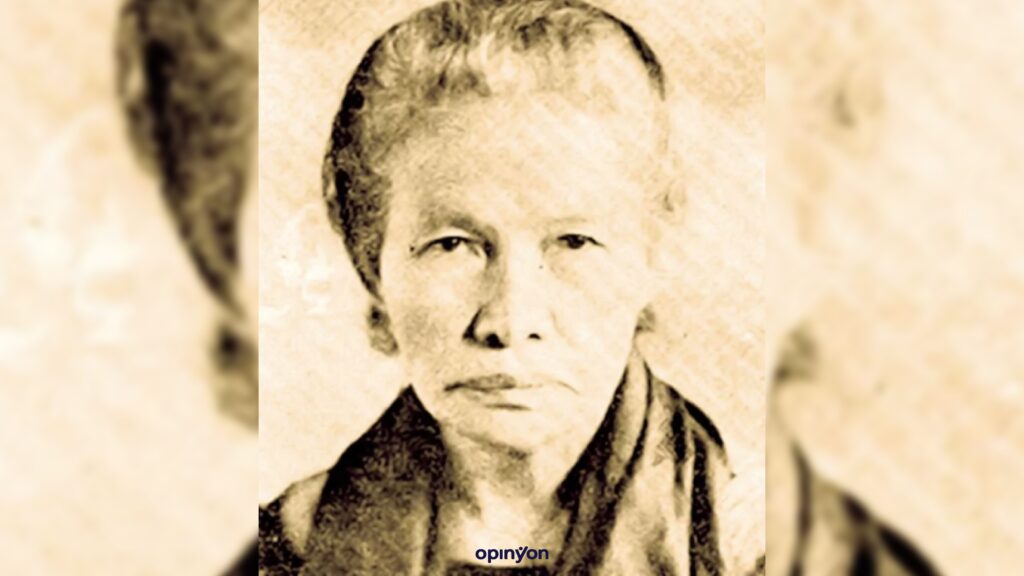
Every June 12, we stand in solemn pride as we raise the flag and recall the familiar names etched into the nation’s consciousness: Rizal, Bonifacio, Aguinaldo. These figures loom large in the story of Philippine independence—and rightfully so. But history is a vast field, and not all heroes have found their place in the spotlight.
Behind the headlines of revolutions and proclamations were brave men and women—some illiterate, some anonymous—who fought for freedom with equal courage. These unsung heroes were warriors, writers, healers, spies, and leaders who gave everything, often receiving little recognition in return.
As we celebrate independence, let’s take a moment to honor a few of them.
1. Teresa Magbanua – The “Visayan Joan of Arc”
A schoolteacher turned revolutionary, Teresa Magbanua led troops into battle during the Philippine Revolution and the Philippine-American War. She was the only woman known to lead men in combat in the Visayas.
Dubbed the “Joan of Arc of the Visayas,” Magbanua fought in Panay Island, proving that heroism wasn’t reserved for men or for Luzon alone. After the wars, she lived a modest life and sold personal possessions to support guerrilla fighters during World War II.
Why she matters: Magbanua shattered both colonial and gender expectations, showing that leadership in the revolution wasn’t exclusive to ilustrados or men.
2. Macario Sakay – The Republic That Wasn’t Recognized
When the Americans declared the Philippines “pacified,” Macario Sakay said, “Not so fast.”
A former member of the Katipunan, Sakay refused to surrender and declared the establishment of the Tagalog Republic—a continuation of the revolutionary spirit. He led a fierce resistance in the mountains of Rizal and Laguna even after Aguinaldo’s capture.
Eventually, Sakay was tricked into surrendering with the promise of amnesty. Instead, he was arrested, labeled a bandit, and executed in 1907.
Why he matters: Sakay’s story reminds us that the fight for independence did not end with a single proclamation—it continued in hidden forests and behind broken promises.
3. Gregoria de Jesús – Keeper of the Flame
More than just Bonifacio’s wife, Gregoria de Jesús—also known as Lakambini ng Katipunan—was a revolutionary in her own right. She organized the women of the Katipunan, safeguarded documents, and transported weapons under the cover of darkness.
After Bonifacio’s death, she never renounced the cause. She wrote her own account of the Katipunan, ensuring that future generations could hear the story from someone who lived it.
Why she matters: De Jesús shows us that revolution is not just fought with blades and bullets—it is also fought with memory, resilience, and truth.
4. Sultan Kudarat – Resistance Before the Nation Was Born
Before “Filipino” was even a national identity, Sultan Muhammad Dipatuan Kudarat of Maguindanao led resistance against Spanish conquest in Mindanao during the 1600s.
He united various Mindanaoan communities under one banner, successfully repelling several Spanish military campaigns. His leadership preserved Islamic sovereignty in the south for over a century.
Why he matters: Kudarat’s resistance predates the 1896 Revolution, reminding us that colonialism—and the resistance against it—didn’t begin or end in Luzon.
5. Trinidad Tecson – The “Mother of Biak-na-Bato”
A fierce revolutionary who fought in twelve battles, Trinidad Tecson was known for smuggling weapons, tending to wounded soldiers, and even carrying wounded men on her back through dangerous terrain.
She was one of the few women given the title of “Mother of the Philippine Red Cross” for her work in field hospitals during the revolution.
Why she matters: Tecson defied expectations of femininity, choosing not only to support the revolution but to fight and bleed for it.
Why Their Stories Matter
Our national history, as it’s often taught, can feel like a tidy tale told in neat chapters. But the real story of Philippine independence is complex, diverse, and collective. It wasn’t just fought in Manila. It wasn’t just led by men in barong tagalog. It wasn’t over in 1898.
There were women who led troops, Muslims who defended their sultanates, farmers who carried machetes instead of guns, and freedom fighters who were labeled as outlaws simply for refusing to give up.
These are the stories we must tell—not just to fill in the blanks, but to honor the full truth of our nationhood.
Because freedom is not the work of a few names carved in stone.
It is the legacy of thousands whose names we may never know—but whose courage gave us the right to stand and speak freely today.
Sources:
Ocampo, Ambeth. Looking Back series. Anvil Publishing.
Reyes, Raquel. “Gender, Nation, and the Politics of Dress in the Philippine Revolution.” Modern Asian Studies, Cambridge University Press.
Philippine Historical Association. Philippine Revolution: Perspectives from the Regions.
Official Gazette of the Republic of the Philippines. https://www.officialgazette.gov.ph
“Macario Sakay and the Katagalugan Republic.” National Historical Commission of the Philippines.
Del Mundo, Clodualdo Jr. Writing the Filipino Film: Traditions, Genres, and Popular Cinema.
Aluit, Alfonso. By Sword and Fire: The Destruction of Manila in World War II, 3 February – 3 March 1945.