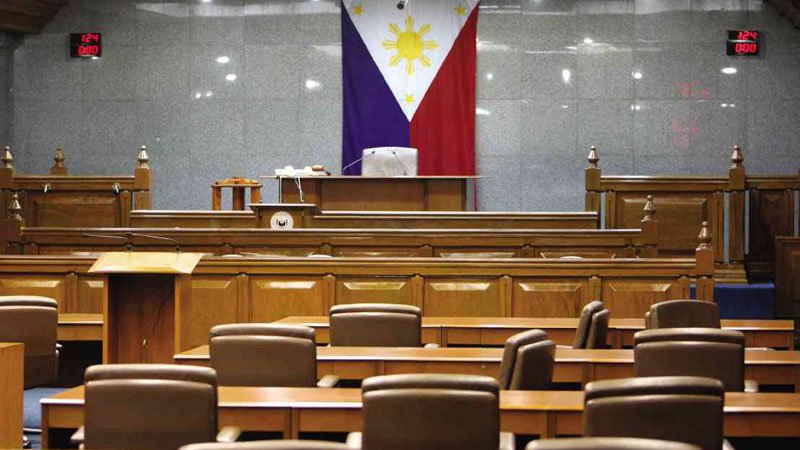
MANILA, Philippines — After months of delay, the Senate has finally constituted itself as an impeachment court to try Vice President Sara Duterte, with the formal convening of proceedings scheduled for Wednesday, June 11.
Senate President Francis Escudero, who took his oath as presiding officer on Monday, explained that the Senate became an impeachment court the moment he assumed that role — even before the rest of the senators had taken their oaths.
“Once you convene it, you’ve already struck the gavel. Constituted means it has been formally created. It’s considered constituted because there’s already a presiding officer, even if the members haven’t formally assumed their roles yet,” he told reporters.
“It’s like us now — the Senate is already constituted, but we haven’t convened yet. That will happen later this afternoon.”
The remaining 22 senators, who will serve as judges in the trial, are expected to be sworn in Tuesday afternoon.
Escudero emphasized that the timing and sequencing of the court’s constitution and convening are procedural matters that should not affect the trial’s progress.
“There’s no technicality. If you’re asking whether someone will bring this to the Supreme Court to question it on a technicality that could possibly stop the impeachment, I don’t think so.”
According to Escudero, the June 11 session will primarily be ceremonial, as the House of Representatives’ prosecution panel presents the Articles of Impeachment against Duterte. Originally, the plan was to use the presentation of charges to initiate the convening of the impeachment court, but the Senate instead opted to refer the articles to its committee on rules during a plenary session on Monday.
Once convened, the impeachment court will oversee all matters related to the trial — including pre-trial conferences, the issuance of summonses, and the scheduling of hearings.
The impeachment trial follows the transmission of charges by the House of Representatives on February 5. More than 200 lawmakers voted to impeach Duterte on various grounds, including:
The alleged misuse of confidential funds during her time as Vice President and as Education Secretary;
Alleged threats against President Ferdinand “Bongbong” Marcos Jr., First Lady Liza Araneta Marcos, and House Speaker Martin Romualdez;
And the alleged failure to declare all assets in her Statement of Assets, Liabilities, and Net Worth (SALN).
The upcoming trial marks a significant chapter in Philippine political history, with the Senate now preparing to fulfill its constitutional role as the impeachment court.